Fossil vertebrates
- 200 Years of Vertebrate Paleoichnology
- A fossil primate of uncertain affinities from the earliest late Eocene of Egypt

- A Manual of the Anatomy of Vertebrated Animals (1881)
- A method for improved identification of postcrania from mammalian fossil assemblages: multivariate discriminant function analysis of camelid astragali
- A New Occurrence of Paleocene Mammals in the Evanston Formation, Southwestern Wyoming
- A new species of glirid rodent Vasseuromys from the Aragonian (Miocene) of the Ebro Basin (north−eastern Spain)
- A Revision of the Murinae (Rodentia, Mammalia) of Kohfidisch (Upper-Miocene, Burgenland, Austria)
- A study of the propodial morphology on Late Jurassic plesiosaurs from Spitsbergen
- American Society of Mammalogists
- Amphibia of Enspel (Late Oligocene, Germany)
- An Early Miocene microtoid cricetid rodent from the Junggar Basin of Xinjiang, China
- An electronic database for the late Quaternary distribution of mammal species in the United States
- An overview of the anuran fossil record
- Anatomy, death, and preservation of a woolly mammoth (Mammuthus primigenius) calf, Yamal Peninsula, northwest Siberia
- At the feet of the dinosaurs: the early history and radiation of lizards
- Australia's Giant Animals - The Megafauna
- Australia's Lost Kingdoms - Fascinating animal facts
- Australian Mesozoic Marine Reptiles
- B3405 Vertebrate Zoology
- Bat remains (Mammalia, Chiroptera) from the Middle Pleistocene site of Qesem Cave, Israel, with the first Pleistocene record of Fruit Bats in the Mediterranean region
- BBC - Walking with Beasts
- Biochronology of the Plio-Pleistocene Terrestrial mammals of Sardinia: The state of the art
- Bone microstructure and growth patterns of early mammals
- Carnivorous dinocephalian from the Middle Permian of Brazil and tetrapod dispersal in Pangaea
- Cenozoic Mammals of Land and Sea: Tributes to the Career of Clayton E. Ray
- Charles University Prague, Czech Republic - Palaeoherpetology and Evolutionary Morphology Group
- Chinese Academy of Sciences - Institute of Vertebrate Paleontology and Paleoanthropology
- Collection of Cenozoic mammals from Uruguay
- Comparisons, Homology and Phylogeny of Vertebrates
- Cretaceous Anurans from Central Asia
- Database of Lower Vertebrates - fossil Fishes, Amphibians, Reptiles from Neogene of Eurasia
- Descriptive and Comparative Osteology of the Oldest Fossil Squirrel, Protosciurus (Rodentia: Sciuridae)
- Digital Library of Vertebrate Morphology - It currently serves high-resolution X-ray CT-generated imagery of the skulls of 37 vertebrate species, including Recent species and important fossils.
- Dispersals of placental carnivorous mammals (Carnivoramorpha, Oxyaenodonta & Hyaenodonta) near the Paleocene-Eocene boundary: a climatic and almost worldwide story
- Diversity of mammals in the Neogene of Europe: Comparing data quality of large and small mammals in the NOW database
- Dynasties of Stone- The Paleo-illustration of Kelly Taylor - Dinosaur art - Extinct mammals - Paleozoic's
- Earliest Cretaceous mammals from the western United States
- Early Eocene frogs from Vastan Lignite Mine, Gujarat, India
- Early Toringian small mammals fauna from Fontana Marella cave (Varese, Lombardy, North Italy)
- Early Vertebrate Groups & Systematics
- Eemian mammal fauna of central Europe
- Eurasian large mammal dynamics in response to changing environments during the Late Neogene
- Fossil Bones In The Coso Range, California
- Fossil Mammal Hall
- Fossil record of early tetrapods: worker effort, and the end-Permian mass extinction
- Fossil record of the Eurasian Neogene insectivores (Erinaceomorpha, Soricomorpha, Mammalia)
- Fossil Record of the Vertebrates
- Fossil Synapsids
- Fossil tetrapods: stratigraphic, geologic and ecological data
- Fossil Vertebrates from the Bahamas
- Fossilien aus der Grube Messel
- Fossils explained 34: Crocodilians
- Fossils explained 48: Placodonts
- Fossils explained 51: Sloths
- Giant Camels from the Cenozoic of North America
- Ice Age Mammals
- In the shadow of bovids: suids, cervids and giraffids from the Plio-Pleistocene of Greece
- Krasiejow
- Larval development in Oligocene palaeobatrachid frogs
- Late Cenozoic History of the Genus Micromys (Mammalia, Rodentia) in Central Europe
- Late Glacial and Holocene micromammals of northeastern Europe
- Late Pleistocene Rodents (mammalia: Rodentia) From The Baranica Cave Near Knjazevac (eastern Serbia): Systematics And Palaeoecology
- Lizards and amphisbaenians (Reptilia, Squamata) from the late Eocene of Sossís (Catalonia, Spain)
- Macroevolutionary and morphofunctional patterns in theropod skulls: A morphometric approach
- Major Features of Vertebrate Evolution
- Mammalian Faunal Zones of the Bridger Middle Eocene
- Mammals troughout time
- Marine and terrestrial vertebrates from the Middle Miocene of Grund (Lower Austria)
- Marmarth Research Foundation in the Hell Creek Formation of North Dakota
- Messel Pit Fossil Site
- Mesozoic Anurans
- Mesozoic Eucynodonts
- Mesozoic Vertebrates from the Upper Blue Nile Gorge, Ethiopia
- Micromammalian faunas from the Middle Miocene (Middle Aragonian) of the Tudela Formation (Ebro Basin, Spain)
- Middle-late Miocene snakes from the Pannonian Basin
- Milano University - Vertebrate palaeontology
- Miocene of Western Asia; Fossil mammals at the crossroads of faunal provinces and climate regimes
- Miocene rodent evolution and migration. Muroidea from Pakistan, Turkey and Northern Africa
- Nature of the fossil record of Neogene insectivores
- Nebraska University State Museum - Vertebrate Paleontology
- Neogene mammal localities of Greece: Faunas, chronology and biostratigraphy
- Neoteny and paedomorphosis as evolutionary factors in Tertiary Amphibia
- New data on Eomyidae and Gliridae (Rodentia, Mammalia) from the Late Miocene of Austria
- North American Mammalian Paleofaunal Database Search Engine
- North American Eocene Sea Cows (Mammalia: Sirenia)
- Notes about the parallels in evolution of the Pleistocene cervids from Greece (Crete, Kassos and Karpathos), Japan (the Ryukyu-islands) and Philippines (Masbate)
- NOW - Neogene Mammal Database
- Never Mind the Dinosaurs! - Other Mesozoic Life
- New data on Eomyidae and Gliridae (Rodentia, Mammalia) from the Late Miocene of Austria
- Oceans of Kansas
- Oldest North American primate and mammalian biogeography during the Paleocene–Eocene Thermal Maximum
- Origin of Rodents
- Palaeozoic Microvertebrates
- Paleocene mammals of the world
- Paleoneurology
- Peabody Museum, Yale: Vertebrate Paleontology
- Plesiosaur Site
- Prehistoric Data Files - The purpose of these pages is to present general data concerning prehistoric animals
- Preserving Vertebrate Fossils: Notes From The Laboratory
- Prey deposits and den sites of the Upper Pleistocene hyena Crocuta crocuta spelaea (Goldfuss, 1823) in horizontal and vertical caves of the Bohemian Karst (Czech Republic)
- Radiocarbon chronology of Late Pleistocene large mammal faunas from the Pannonian basin (Hungary)
- Replication Skulls
- Review of fossil Caudata of Europe
- Revision of the early Middle Pleistocene bears (Ursidae, Mammalia) of Central Europe, with special respect to possible co-occurrence of spelaeoid and arctoid lineages
- Rodent faunas of the Mio-Pliocene continental sediments of the Teruel-Alfambra region, Spain
- Rodents of the Bridgerian (Middle Eocene) Elderberry Canyon Local Fauna of Eastern Nevada
- Sabretooths!
- Sciuridae, Gliridae and Eomyidae (Rodentia, Mammalia) from the Middle Miocene of St. Stefan in the Gratkorn Basin (Styria, Austria)
- Sirenian Metaxytherium (Mammalia: Dugongidae) in the Badenian (Middle Miocene) of Central Europe
- Skull of the neotenous salamandrid amphibian Triturus alpestris and abbreviated developments in the Tertiary Salamandridae
- Small-sized Rhinoceroses From The Late Pleistocene Of Apulia (Southern Italy)
- Society of Vertebrate Paleontology
- Soricids (Soricidae, Mammalia) from Early Oligocene fissure fillings in South Germany – and a phylogenetic analysis of the Heterosoricinae
- Stephanorhinus Etruscus (falconer, 1868) From Pirro Nord (Apricena, Foggia, Southern Italy) With Notes On The Other Late Early Pleistocene Rhinoceros Remains Of Italy
- Stone-splitters And Expansive Demolition Agents: Breaking Big Rocks With Little Effort On Vertebrate Paleontological Excavations
- Succession of rodent faunas from the Mio/Pliocene lacustrine deposits of the Florina-Ptolemais-Servia Basin (Greece)
- Systematics and dental microwear of the late Miocene Gliridae (Rodentia, Mammalia) from Hayranlı, Anatolia: Implications for paleoecology and paleobiodiversity
- Taxonomic re-assessment and phylogenetic relationships of Miocene homonymously spiral-horned antelopes
- Taxonomy and distribution of Tertiary discoglossids (Anura) of the genus Latonia v.Meyer, 1843
- Tragulidae (Artiodactyla, Ruminantia) from the Middle Miocene Chinji Formation of Pakistan
- Transitional Fossils and the Origin of Turtles
- Upper Pleistocene Panthera leo spelaea (Goldfuss, 1810) skeleton remains from Praha-Podbaba and other lion finds from loess and river terrace sites in Central Bohemia (Czech Republic)
- Upper Pleistocene Small mammal fauna from Salnova quarry (Saltrio-Varese-Northwestern Lombardy): paleoenvironmental reconstruction and Chionomys nivalis population study
- Vertebrate Natural History (WMAN 224)
- Vertebrate Paleontologists
- Virtual Palaeontology: Gait Reconstruction of Extinct Vertebrates Using High Performance Computing
Books about fossil vertebrates
|
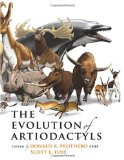
The Evolution of Artiodactyls Artiodactyls are diverse and successful hoofed mammals, represented by nearly two hundred living species of pigs, peccaries, hippos, camels, deer, sheep, cattle, giraffes, and other even-toed ungulates. In the recent years, a tremendous amount of research has been conducted on this important order. The Evolution of Artiodactyls synthesizes this research into a single, comprehensive volume. Here Donald R. Prothero, Scott E. Foss, and a team of distinguished international experts explore a variety of topics, including molecular phylogeny of terrestrial artiodactyls phylogenetic relationships of cetaceans to terrestrial artiodactyls, and the earliest artiodactyls—Diacodexidae, Dichobunidae, Homacodontidae, Leptochoeridae, and Raoellidae. |
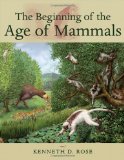 |
The Beginning of the Age of Mammals Rose surveys the evolution of mammals, beginning with their origin from cynodont therapsids in the Mesozoic, contemporary with dinosaurs, through the early Cenozoic, with emphasis on the Paleocene and Eocene adaptive radiations of therian mammals. Focusing on the fossil record, he presents the anatomical evidence used to interpret behavior and phylogenetic relationships. The life's work of one of the most knowledgeable researchers in the field, this richly illustrated, magisterial book combines sound scientific principles and meticulous research and belongs on the shelf of every paleontologist and mammalogist. |
 |
Chinese Fossil Vertebrates This book is a comprehensive, chronologically ordered review of China's vertebrate fossil record. It also presents a history of vertebrate paleontological studies in China and an entrée to some important issues of systematics, evolutionary history, paleoecology, taphonomy, and functional anatomy best elucidated by China's fossils. |
 |
Evolution of Tertiary Mammals of North America: Volume 2, Small Mammals, Xenarthrans, and Marine Mammals This is a hands-on guide for graduate students and young researchers wishing to perfect the practical skills needed for a successful research career. By teaching junior scientists to develop effective research habits, the book helps to make the experience of graduate study a more efficient and rewarding one. The authors have taught a graduate course on the topics covered for many years, and provide a sample curriculum for instructors in graduate schools wanting to teach a similar course. Topics covered include: choosing a research topic, department, and advisor; making workplans; the ethics of research; using scientific literature; perfecting oral and written communication; publishing papers; writing proposals; managing time effectively; and planning a scientific career and applying for jobs in research and industry. The wealth of advice is invaluable to students, junior researchers and mentors in all fields of science, engineering, and the humanities. |
 |
The Primate Fossil Record The Primate Fossil Record is a profusely illustrated, up-to-date, and comprehensive treatment of primate paleontology that captures the complete history of the discovery and interpretation of primate fossils. Each chapter emphasizes three key components of the record of primate evolution: history of discovery, taxonomy of the fossils, and evolution of the adaptive radiations they represent. The volume objectively summarizes the many intellectual debates surrounding the fossil record and provides a foundation of reference information on the last two decades of astounding discoveries and worldwide field research for physical anthropologists, paleontologists, and evolutionary biologists. |
 |
Late Cretaceous and Cenozoic Mammals of North America: Biostratigraphy and Geochronology This book places into modern context the information by which North American mammalian paleontologists recognize, divide, calibrate, and discuss intervals of mammalian evolution known as North American Land Mammal Ages. It incorporates new information on the systematic biology of the fossil record and utilizes the many recent advances in geochronologic methods and their results. |
 |
Vertebrate Palaeontology Vertebrate Palaeontology is a complete, up-to-date history of the evolution of vertebrates. The third edition of this popular text has been extensively revised to incorporate the latest research, including new material from North and South America, Australia, Europe, China, Africa and Russia. Highlights astonishing new discoveries including new dinosaurs and Mesozoic birds from China features a new chapter on how to study fossil vertebrates provides an increased emphasis on the cladistic framework with cladograms set apart from the body of the text and full lists of diagnostic characters includes new molecular evidence on early mammal diversification new features aid study including new functional and developmental feature spreads, key questions and extensive references to useful web sites strong phylogenetic focus making it an up-to-date source of the latest broad-scale systematic data on vertebrate evolution |
 |
Fossil Mammals of Asia: Neogene Biostratigraphy and Chronology Fossil Mammals of Asia, edited by and with contributions from world-renowned scholars, is the first major work devoted to the late Cenozoic (Neogene) mammalian biostratigraphy and geochronology of Asia. This volume employs cutting-edge biostratigraphic and geochemical dating methods to map the emergence of mammals across the continent. Written by specialists working in a variety of Asian regions, it uses data from many basins with spectacular fossil records to establish a groundbreaking geochronological framework for the evolution of land mammals. Asia's violent tectonic history has resulted in some of the world's most varied topography, and its high mountain ranges and intense monsoon climates have spawned widely diverse environments over time. These geologic conditions profoundly influenced the evolution of Asian mammals and their migration into Europe, Africa, and North America. Focusing on amazing new fossil finds that have redefined Asia's role in mammalian evolution, this volume synthesizes information from a range of field studies on Asian mammals and biostratigraphy, helping to trace the histories and movements of extinct and extant mammals from various major groups and all northern continents, and providing geologists with a richer understanding of a variety of Asian terrains. |