Geology software
- 123D Technology 123D Simulation & Visualization - modeling petroleum systems in 3 dimensions on a desktop computer
- 3DField - Contour maps and digitize image program
- Advanced
Geotechnology, Inc.
STABView - Practical borehole stability, lost circulation and sand production prediction software for drilling, completion and production engineers.
- Applied
Computer Engineering
GridSTAT - an integrated geostatistical reservoir description and modeling software - AQTESOLV - The leading aquifer test analysis Software
- Badley Earth Sciences - Providing Solutions for the Petroleum Industry
- Baker-Hughes
JewelSuite Subsurface Modeling Software - geological modeling and reservoir simulation,
GMI•SFIB Software - stress and failure of inclined boreholes, GMI•WellCheck - incorporates wellbore stability into well design,
GMI•Caliper - determines orientation and extent of stress-induced wellbore breakouts,
GMI•Imager - get a better look at wellbore image data from acoustic to electrical to optical,
GMI•ModelBuilder - uses well log information to calculate overburden and pore pressure based on normal compaction trends,
GMI•MohrFracs - leverages fractured reservoir information from other software applications - Bugware - software for data collection and graphing
- BYSoft Inc.
GeoVision - Integrated 3D Visualization package for geoscientist,
BYMap - GIS map display and editor,
BYHorizon - Horizon and contour viewer, editor and converter,
BYGraph - complete graph display package and tools for geoscientists,
BYLog - comprehensive log viewer and editor,
BYSeis - comprehensive seismic viewer and editor - Cambridge Earth Sciences Software
- Century Geophysical Corporation - A Manufacturer of Geophysical Logging Systems
- ComGrafix, Inc. - Mapping and GIS
- Concept Systems Ltd.- development of software and hardware solutions to meet the navigation and data management requirements of the oil exploration industry world-wide
- CoreWall - Open Source real-time stratigraphic correlation, core description, and data visualization system
Corelyzer - scalable, extensible visualization tool developed to enhance the study of geological cores
Correlator - create composite and spliced stratigraphic sections from multiple cores for core-core and core-log integration
CoreNavigator - 3D visual indexer of complex core-stratigraphic sedimentary datasets and databases - Digital Formation, Inc. - The premier graphical solution and professional consultation provider for the E&P industry
- Digital
Geology Limited
DepthCon2000 is a Windows/NT software package for depth conversion and structure interpretation - Directional Drilling - Underground construction services for utility and many other trenching needs
- Dr. A. Plesch - Geologic Map Patterns for Canvas, Illustrator and Freehand
- Drilling
Software
Quick Drilling Calculations - solve the engineering problems quickly - Drilling Software and Practical Directional Drilling Technology
- Dynamic
Graphics, Inc.
EarthVision - 3D model building and visualization - EarthCamp.com
Well Logger - create soil boring logs and well construction diagrams - EasySolve Software LLC - EasySolve Software LLC is a limited liability company dedicated to the development and distribution of high quality, low cost programs that are easy to use and provide report quality output. Currently available for download are a variety of tools for the environmental and earth science industry. Each program is designed by licensed, practicing industry professionals
- Eighteen Software
HawkEye - 3D stereoscopic software,
DeepEarth - interact with a geological environment,
Mineral Venture - allows students and geologists to participate in a mineral exploration campaign,
Topomorpher - professional version of HawkEye - Enviroland - Interactive enviromental educational software
- Fine Software - developing and supplying civil engineering software (structural and geotechnical)
- GAEA Technologies Ltd - geology software for the petroleum, geotechnical, mining, environmental and GIS industry
- GasCondOil
- Geo&Soft
International - specialises in
Geosciences and Environmental Engineering,
ISOMAP constructs map surfaces,
DBSOND filing of the boreholes,
ELETOM electrical tomography,
INQUIMAP modelling of aquifers,
WELL pumping tests,
H.A.P.P.I.E. risk of contamination,
SID hydraulic sections,
I.L.A. slope stabiliy,
INSITU in situ tests interpretation,
LIQUITER liquefaction of terrains,
DIADIM bulkheads and diaphragms,
CE.CA.P. foundations analysis,
DIADIM bulkheads and diaphragms,
ROCK3D reconstruction of rock blocks,
ROTOMAP rock falls,
CLU_STAR cluster analysis,
ACCECALC seismic amplification - Geogiga Technology Corp.
Geogiga Front End - Free Software on Windows, used to preprocess seismic data,
Geogiga Seismic - shallow seismic data processing and interpretation software package, which includes Front End, Reflector, Refractor, Surface, and SF Imager,
Geogiga RTomo - resistivity tomography software, is used in electrical imaging survey - GeoGlobal
Technologies Inc. - An International
Consulting and Software Sales Corporation,
SAMUEL - UNIX software - GeoGraphix,
Inc.- Integrated geophysical and
geological solutions,
Discovery - access, manipulate, analyze, and interpret geologic, geophysical, petrophysical, and production-related reservoir data in a completely streamlined workflow environment - geoLOGIC systems, ltd.
- Geological Software Mac, Windows, DOS, UNIX
- Geologynet.com - Geochemistry and drillhole/mapping software for geologists
- GeolOil - reservoir modelling software
LAS well logs - LAS well logs reader, viewer and plotter
GeolOil Logging Scripting - unique, minimal, specific purpose scripting language technology to process well logs for advanced petrophysicists, geologists, geophysicists and geoscientists
Simulation Gridding and Production Scheduler - stable simulation grid builder for the simulators ECLIPSE, STARS and MORE
- Geomath, Software & Statistics
- GeoMechanics
International
GMI•SFIB (Stress and Failure of Inclined Boreholes),
GMI•WellCheck - software package for well design and stability analysis,
GMI•Imager - image analysis software,
GMI•ImagerCD - data archiving,
GMI•MohrFracs - optimization of drilling trajectories for stability and production performance in fractured reservoirs,
GMI•Caliper - analysis of four-arm and six-arm caliper data, - Geomodeling Technology Corp.
SBED (small scale heterogeneity modeling and upscaling),
VisualVoxAt (3D seismic attribute analysis and interpretation),
SBEDStudio( multi-scale geological heterogeniety modeling and uncertainty assessment) - GeoPLUS
UK - develops software for the
petroleum industry, with a focus on interactive
applications that integrate many functions into
a single, easy-to-use environment.
PETRA and PetraSeis (data management, manipulation, visualization, interpretation, and integration of geological, geophysical, petrophysical and engineering data) - GeoScience Software
- Geosoft Inc.'s Geoscience WebScape
- Geostatistical Software for the PC
- Geosurface Technologies
- GeoVect - Map Conversion Services - Specializing in the conversion of hard copy map information to digital data
- GTA Geoinformatik GmbH - developer and supplier of 3D and 2D Mapping and visualisation software
- Halliburton
LogEdit - Petrophysical Interpretation Software,
Drillworks - Pore Pressure Prediction and Geomechanical Analysis Software,
LithoTect - Advanced Structural Analysis Software for complex geology,
PetroWorks - log interpretation, earth modeling and reservoir description,
StratWorks 3D - analyze and interpret logs in a 3D environment ,
Stratworks - geological interpretation software,
Z-MAP Plus - Petroleum Mapping Software,
ezModel - Structural Reservoir Framework Software,
FZAP! - Fault Interpretation Software,
GeoProbe - Volume Interpretation Software,
PostStack - Attribute Interpretation Software,
SeisWorks - 2D/3D Seismic Interpretation Software,
SpecDecomp - Spectral Decomposition Software,
ZAP! - 3d Survey Event Tracking Software,
Permedia Petroleum Systems 1D - 1D basin modeling and wireline processing toolkit,
Permedia Pore Pressure - conducting pore pressure studies and combining pressure data from multiple sources,
Permedia Suite - complete basin to reservoir petroleum systems modeling package, for evaluating petroleum generation, flow and emplacement at reservoir or basin scales,
Permedia Viewers - data mining and integration, QC, and browsing. View data across all length scales, from well, reservoir, basin, to the entire region,
Permedia Petroleum Systems - 1D, 2D and 3D petroleum systems modeling toolkit for basin modelers.
Drillworks Explorer - accessing your geopressure and geomechanical data.
ProMAX 4D Seismic Data Processing - 4D Seismic Data Processing Software to improve reservoir management decisions
ProMAX Family Seismic Data Processing Software - Seismic data processing software
ProMAX VSP Vertical Seismic Profile Software - Easy processing and quality control of VSP data
ProMAX - DepthCharge Depth Imaging Software - From acquisition to earth model, accurate velocity estimation and depth imaging
RAVE - Reservoir Attribute Analysis Software
SynTool - Synthetic Seismogram Software
SeisSpace/ProMAX Software - seismic data processing software
Well Seismic Fusion - Pre-stack Interpretation Software - Haneberg Geoscience
- Hydrocarbon
Data Systems, Inc. - provider
of Log Analysis software for Geologists, Engineers
and Petrophysicists.
HDS 2000 - petrophysical Log Analysis Package,
GMAN - Gas Field Manager - ImageWolf - Quickly Find Thousands of Your Picture and Movie Files
- Infostat
Systems, Inc. - Sofware for the
drilling industry.
RIMBase - a wellsite reporting and database application for well operating companies,
RIMDrill - a drilling database with IADC reporting capability designed for drilling contractors,
RIMReport - a reporting application for creating IADC reports for drilling contractors - Interpex Limtited - Specialists in PC Based Geophysical Software
- Knowledge
Systems- The geopressure company.
DrillWorks/PREDICT - geopressure analysis,
DrillWorks/BASIN - Geopressure Prediction, Modeling - LaboSoft
LaboTex - The Crystallographic Texture software - Lasreader
- LogDig - Automated Well Log Digitizing Software - LogDig brings to your desktop a powerful, easy to use, graphical user interface with a comprehensive selection of features and options for digitizing your well logs
- Logicom E&P
LogIC - petrophysical software for the analysis of NMR, image, sonic waveform and standard well-logging suites,
REP - Reserves Evaluation Programme uses the well-known Monte-Carlo technique for a rigorous solution of the volumetrics equation,
Core Chopper - takes digital images of boxed core and quickly turns them into depth-indexed image strips for import into your petrophysics program,
Q-SCAL - loading, storing and analyzing all types of conventional and special core analysis data - Lynx Geosystems, Inc.
- Madagascar - open-source software package for multidimensional data analysis and reproducible computational experiments in geophysics and related fields
- Make platetectonic reconstruction
- Manifold SystemMapping, GIS, Database and 3D Software, over 30GB of free maps and data
- Mapping/GIS Software Development Group
- Maurer
Petroleum Engineering Software -
software for drilling and coiled-tubing operations.
PORE - Determine the Pore-, Fracture and Overburden Pressures,
WELLSTAB - Mechanical and Chemical Borehole Stability Design,
WELPATH - Directional Well Planning, Survey Management and Anti-Collision,
ADET - Select Casing Shoes, Design and Check Casing Strings,
CWEAR - Check for any Casing and Riser Wear,
CEMENT - Wellbore Cement Placement and Hydraulics,
DDRAG - Tubular Torque & Drag Prediction, Wellbore Friction Factor Determination,
HYDMOD, MUDLITE and HTHPFLOW - Hydraulics for Conventional (Hydmod), Underbalanced (Mudlite) and HTHP Wells (HTHPFlow),
WELCON - Well control for water and oil base fluids in directional wells,
WELLCOST - Well Cost Determination,
AFE - Preparation and Well Cost Tracking - Midland Valley - Structural Geology Software and Services
- MineGeo - mine site geology mapping software provides the ability to graphically capture intelligent lithology and sample data in 3D in the most efficient and practical way, indeed, even capturing data at the mine face as it develops
- Mineralogy Software
- MINEQL
- MS
Macrosystem
3D Surface View Software - Interactive 3D scientific visualization with real time rendering - MWSoftware Stereographic Projections
- North Face Software Ltd. - Geological Software Suite
- Norwegian Computing Center
Havana - fault modelling software - Open Source Remote Sensing Effort
- OpendTect - completely free seismic interpretation Solution
- Operations Geology Software - links the office to the wellsite - standardises data entry and reporting, and securely stores current and historial data. It offers powerful reporting and simple generation of daily geological & final well reports (amongst many other, customisable reports)
- Oriana
- Paleontological Electronic Resources - freewares from different universities
- Paradigm
EarthStudy 360 - maximizes the information that can be extracted from recorded seismic data. The wealth of seismic image data is decomposed into full-azimuth, angle-dependent reflectivities and directional (dip and azimuth) data components. These components can be selectively sampled, creatively combined, dynamically visualized, and further processed to secure images of the subsurface
EarthStudy 360 Illuminator - advanced seismic data mining tool
Echos - provides an innovative link between seismic data and processing parameters and sequences, with interactive data comparison windows that allow users to quickly see the impact of new processes, parameters and workflows on their seismic data. This streamlines the link between parameter analysis and production data processing.
GeoDepth - velocity determination and 3D/2D velocity model building system
Migrations - full range of 3D pre-stack and post-stack time and depth migration methods, aimed at supporting a wide range of imaging objectives
Explorer - time-to-depth conversion solution with a complete set of tools for velocity modeling, quality control, and depth conversion
GeoSec - multi-faceted structural geology tool provides valuable insight about the reservoir geometry and structural history of potential prospects
GOCAD - seismic, geological and reservoir modeling
Kine3D - structural analysis tool restores 3D basin and reservoir models in complex areas where seismic data is scarce or of poor quality
SeisEarth - perform structural and stratigraphic interpretation across many different vintages of 2D and 3D seismic data, while also integrating well data into their interpretation
SKUA - provides an environment for true collaboration coupled with the cutting-edge science to ensure geological integrity
StratEarth - well log correlation application is a comprehensive, easy-to-use solution for the correlation, interpretation, mapping, display and QC of seismic, geologic, and production data in multiple 2D and 3D environments
VoxelGeo - empowers users to dive deep into 3D seismic datasets for a complete understanding of the subsurface geology
Stratimagic - enhances the qualitative and quantitative assessment of a reservoir through seismic facies analysis
Probe - AVO Analysis and Interpretation system is the ideal solution for both interpreters and experts in AVO analysis and reservoir characterization
SeisFacies - provide insight into reservoir properties
Geolog - petrophysical and geological analysis tools, well data management, superior graphics, and robust data integration
- PayZone
PayZone - interactive program that simulates the drilling of an oil or gas well - Peloton
MasterView - simplifies operations by providing a seamless flow of data between Peloton applications and external products,
WellView - complete well information management system for well planning, drilling, completion, testing, and workovers,
RigView - interactive rig and well project scheduling system capable of managing well workloads such as drilling, completions, workovers, service and testing,
SiteView - construction, remediation, reclamation, and facilities management information system - Petcom,
Inc. - provides petrophysical
software and services for the world-wide petroleum
industry
PowerLog (well log analysis software),
LasView (presentation tool),
Statmin (Statistical Mineral model) - Petroclient - under evaluation client/server Internet based application for Petroleum Industry
- PetroSoft,
Inc. - Seismic reservoir characterization.
Attrib3D - computes, displays and outputs numerous physical and geometric attributes from seismic data,
PetroTools - petrophysical analysis and modeling - Petrospec
Technologies - Innovative Geopressure
Software - FREE Pore Pressure Tools,
pWell (Pore Pressure for Realtime),
pQube (Pore Pressure for 3D Seismic),
GPES (GeoPressure Estimation Software) - Petrosys
- Petrove Petroleum Software
- Petroway,
Inc. - company specializing in
engineering software and books for the international
petroleum industry.
Automate - well test analysis,
WinBOAST - three-dimensional, three-phase, black-oil simulator - Pierre A. Zippi, PAZ Software, geology, biostratigraphy
- POLYPLI Software for the visualization of superimposed similar folds
- Pseis - Open Source Parallel Seismic Earth Imaging System
- Reflection Exploratio - Specialists in Windows-based seismic software
- Rocscience
Dips - stereonets,
Phase2 - support design,
Examine3D - 3D stress analysis,
RocFall - rockfall analysis,
RocPlane - planar sliding stability,
Swedge - surface wedges,
Slide - slope stability,
RocSupport - support estimation,
Unwedge - underground wedges,
Examine2D - 2D stress analysis,
ExamineTAB - tabular excavations,
CPillar - pillar stability,
RocData - strength data - Rockware Inc. Earth Science Software
- Russian Virtual GeoNetwork
- Schlumberger
Petrel - Synthetic Seismograms, Facies Modeling, Petrophysical Modeling, Fault Analysis
PetroMod - petroleum systems modeling software combines seismic information, well data and geological knowledge to model the evolution of a sedimentary basin over geological time to predict the generation, migration, accumulation, and loss of oil and gas.
Techlog - From basic to advanced wellbore-centric interpretation
Malcom Fluid Characterization Software
Igeoss Structural Geology Software
GeoFrame Reservoir Characterization Software
Omega Seismic Processing Software
ECLIPSE - family of reservoir simulation software - Schlumberger Water Services - Groundwater & Environmental Technology Specialists
- Scion Corporation Home Page
- Scientific software group - World's largest distributor of groundwater software
- SDC Geologix Limited
- Sedimentary Geology Freeware
- SeisScape Visualization Software - Seiscape - seismic visualization tool
- Seismic Micro-Technology Inc. - Exploration Software for the Oil Industry on Windows NT
- Senergyworld
Interactive Petrophysics (IP) - a complete, PC based, petrophysical analysis programme.
Oilfield Data Manager (ODM) - a PC Based Well Data Integration, Interpretation, Correlation and Presentation tool, with powerful and flexible databasing functionality - Simco - Petroleum Software development company
- SIOSEIS - Open source for enhancing and manipulating marine seismic reflection and refraction data
- Sirius Petroleum Software - developing technical engineering software for the Petroleum Engineering market
- Softree
Terrain Tools - Freeware Edition of a quick and easy mapping package - Software and Data for Thermodynamics and Phase Equilibrium Calculations
- Software for Rockhounds
- Software
Oasis
- Stereonett
- StereoPro
- STK: Seismic ToolKit - Open source tool for seismic data processing
- StrataData
Ltd.
StrataBugs - biostratigraphic data management software - StratiFact - Drill Hole Data Management Software
- Subsurface Computer Modeling, Inc.
- Surpac Minex Mining Software - Mine Planning Exploration Geoscience Software
- T-Surf
GOCAD - Structural, velocity and reservoir modeling,
VolumeExplorer - Well path tracking and fast sub-volume visualisation,
JACTA - Analysis of oil and rock volume uncertainties - TerrainLab
- The Logic Group - Planimeter and volumetric software for the oil and gas industry
- TriloBase - fossil collecting database
- TriPlot for Windows
- Trivision Geosystems Ltd - software
developer specializing in leading edge geological
information management solutions for both wellsite
and office environments:
Power*Log - vertical striplog,
Power*Curve - horizontal striplog,
ASCII to LAS Builder - convert ASCII data into LAS format - Velocity Manager- an interactive program for velocity modelling and depth conversion of seismic time grids, designed for use with leading mapping systems on UNIX & Windows
- Veratix
Technologies, Ltd.
PCWellfile - access, review, manipulate, and evaluate well information - VoxelVision
TERRA Studio - high-end visualization and interpretation software,
TERRAzip - SEG Y compression software - Water Resources Consulting Services - Hydrology Software
- Weatherford International
Sendra - two-phase core flow simulator
ResBase - extended database designed to store and analyse data and information from core analysis - WebWinds
Interactive Data System - an interactive science data visualization system, written in Java and available for all major computer platforms - White Water Bay Oklahoma City - White Water Bay is a fantastic place to visit in Oklahoma City. If you are looking for a fun water park, White Water Bay is the place to go. Oklahoma City may be known as middle America, but that doesn't mean it's not a fun place to visit. Find a hotel and visit White Water Bay Oklahoma City!
- WIN-DIG Digitizing Software
- Win Tek for Windows
- WinSim
Inc.
DESIGN II - Rigorous Process Simulation for Chemical and Hydrocarbon Processes including Refining, Petrochemical, Gas Processing, Gas Treating, Refrigeration and Pipelines - ZetaWare Inc
Trinity - cost effective, all-purpose interactive map-based petroleum system analysis, prospect risking toolkit designed for the petroleum geologist to quickly integrate data from seismic interpretation and any other geological data to integrate the geological history with hydrocarbon generation and migration to quantify critical parameters and charge risks for petroleum prospects or exploration blocks
Trinity 3D - petroleum system analysis
Genesis - one-D basin modeling software
KinEx - quick source rock maturation modeling tool for predicting expelled products and GOR from a source rock with inter-bedded organo-facies (geochemical log)
- ZOND - Software for processing and interpretation of geophysical data. Seismic, geoelectric, gravity and magnetics software.
Books about geo software
|
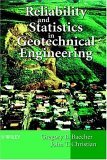
Reliability & Statistics in Geotechnical Engineering Risk and reliability analysis is an area of growing importance in geotechnical engineering, where many variables have to be considered. Statistics, reliability modeling and engineering judgement are employed together to develop risk and decision analyses for civil engineering systems. The resulting engineering models are used to make probabilistic predictions, which are applied to geotechnical problems. Reliability & Statistics in Geotechnical Engineering comprehensively covers the subject of risk and reliability in both practical and research terms Includes extensive use of case studies Presents topics not covered elsewhere--spatial variability and stochastic properties of geological materials Practicing engineers will find this an essential resource as will graduates in geotechnical engineering programmes. |

|
Geostatistics for Engineers and Earth Scientists Engineers and earth scientists are increasingly interested in quantitative methods for the analysis, interpretation, and modeling of data that imperfectly describe natural processes or attributes measured at geographical locations. Inference from imperfect knowledge is the realm of classical statistics. In the case of many natural phenomena, auto- and cross- correlation preclude the use of classical statistics. The appropriate choice in such circumstances is geostatistics, a collection of numerical techniques for the characterization of spatial attributes similar to the treatment in time series analysis of auto-correlated temporal data. As in time series analysis, most geostatistical techniques employ random variables to model the uncertainty that goes with the assessments. The applicability of the methods is not limited by the physical nature of the attributes. Geostatistics for Engineers and Earth Scientists presents a concise introduction to geostatistics with an emphasis on detailed explanations of methods that are parsimonious, nonredundant, and through the test of time have proved to work satisfactorily for a variety of attributes and sampling schemes. Most of these methods are various forms of kriging and stochastic simulation. The presentation follows a modular approach making each chapter as self-contained as possible, thereby allowing for reading of individual chapters, reducing excessive cross-referencing to previous results and offering possibilities for reviewing similar derivations under slightly different circumstances. Guidelines and rules are offered wherever possible to help choose from among alternative methods and to select parameters, thus relieving the user from making subjective calls based on an experience that has yet to be acquired. Geostatistics for Engineers and Earth Scientists is intended to assist in the formal teaching of geostatistics or as a self tutorial for anybody who is motivated to employ geostatistics for sampling design, data analysis, or natural resource characterization. Real data sets are used to illustrate the application of the methodology. |

|
Statistics with Applications in Biology and Geology Designed as a first course in statistics for students in biology and geology, this book gives a practical introduction to using the fundamental parametric statistical models frequently used in those disciplines. The focus is on analyzing data, but it retains a firm basis in models, the likelihood methods, and numeracy. The author illustrates how calculations are performed using the SAS software package, but his presentation extends easily to other software. The SAS programs and data used in examples and exercises are available for download from the Internet. |

|
Statistical Evaluations in Exploration for Mineral Deposits Focuses not only on theory, but examples are also given, frequently originating from experience in mineral exploration by the author who worked worldwide for a mining company. |

|
Evaluation of Uncertainties and Risks in Geology High levels of uncertainty are a trademark of geological investigations, such as the search for oil, diamonds, and uranium. So business ventures related to geology, such as mineral exploration and mining, are naturally associated with higher risks than more traditional entrepreneurial ventures in industry and economy. There are also a number of dangerous natural hazards, e.g. earthquakes, volcanic activities, and inundations, that are the direct result of geological processes. It is of paramount interest to study them all, to describe them, to understand their origin and - if possible - to predict them. While uncertainties, geological risks and natural hazards are often mentioned in geological textbooks, conferences papers, and articles, no comprehensive and systematic evaluation has so far been attempted. This book, written at an appropriately sophisticated level to deal with complexity of these problems, presents a detailed evaluation of the entire problem, discussing it from both, the geological and the mathematical aspects. |
|
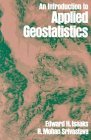
An Introduction to Applied Geostatistics This book presents an introduction to the set of tools that has become known commonly as geostatistics. |
|
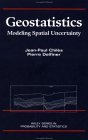
Geostatistics: Modeling Spatial Uncertainty |
|
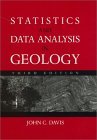
Statistics and Data Analysis in Geology Thoroughly revised and updated, this new edition of the text that helped define the field continues to present important methods in the quantitative analysis of geologic data, while showing students how statistics and computing can be applied to commonly encountered problems in the earth sciences. In addition to new and expanded coverage of key topics, the Third Edition features new pedagogy, end-of-chapter review exercises, and an accompanying website that contains all of the data for every example and exercise found in the book. |
|
Statistics for Petroleum Engineers and Geoscientists A complete guide to statistics for petroleum industry professionals who develop and use reservoir models for fluid flow. This book will help petroleum professionals develop more accurate models, leading to lower sampling costs. It starts with a detailed description of methods for exploring the statistical and geological relationships of data, including histograms, averages, confidence intervals, and measures of variability. Next, the book presents procedures for producing flow models. Linear regression, Kriging, simulated annealing, and other methods are described. The last chapter covers a variety of geological environments, presenting case studies, and shows how the statistical procedures discussed can be used to develop reliable flow models. This is an ideal book for petroleum engineers, geoscientists, hydrologists, and faculty and students in these and related fields. |