Paleontology
- 3d-fossiles.com
- A Brief Introduction to Taphonomy
- Blue Nile Gorge : Fossil Gallery
- Bodo Manitz Homepage und Fossiliensammlung
- Books about Fossils
- Bosco's RockPile
- Cascadia-A Paleo Home Page
- Charles Newsom Fossils
- Combining stratigraphic sections and museum collections to increase biostratigraphic resolution

- Computational Paleontology - page is devoted to the use of mathematical models, simulation, computer graphics and computers in general in paleontology
- Dating the Tree of Life
- Dave's eocene fossils
- Dr. Ben's Ordovician Fossil Page
- Dry Dredgers
- E-Fossils
- Earth Science Guide to Fossil Dating
- Easily-accessible digital palaeontological databases-a new perspective for the storage of palaeontological information
- Effects of sampling standardization on estimates of Phanerozoic marine diversification
- Espace Paleo 3J
- Fossil biomechanics
- Fossil Calibration Database, A New Resource for Divergence Dating
- Fossil Collectors mailing list - The place to share information relating to all aspects of fossil collecting preservation and curation
- Fossil Finds
- Fossil Identification and Paleontology
- Fossil Images
- Fossil Net
- Fossil Preparing Page
- Fossil Surgery
- Fossielen en gesteenten
- Fossilien
- Fossils and Fossil Collecting
- Fossils From the Collection Of Trevor Sands
- Fossils Gallery
- Fossils of the Upper Muschelkalk of South West Germany
- Fosswap
- Frank Peter - Fossilien der Erdgeschichte
- Frequently Asked Questions about Paleontology
- GEOL 3330 Principles of Paleobiology
- Glossaire paleontologique
- Glossary of Invertebrate Paleontology Terms
- International Palaeontological Association
- Invertebrate Macrofossils Laboratory
- Invertebrate Paleontology Tutorial
- Itano Family Fossil Collection
- Jeremy Shaw's fossil page
- Kato's Mineral Fossil Collection
- Learning from the Fossil Record
- Les fossiles
- Macropedia - dinosaurs, fossils & paleontology
- Masahito Fukuda collection (in Japanese)
- MCM CyberMines - Paleontology
- Michal Kosmulski's collection of minerals, fossils and meteorites
- Morphometrics Glossary
- Murex Club
- Non-vertebrate Paleontology Lab
- Northwest Paleontological Association
- Oyvind Hammer's fossil page
- Paleobase - An illustrated, relational database of invertebrate fossils for education and research.
- Paleobiology Database
- Paleo Life
- Paleontologia 2000 (in italian)
- Palaeontological Association
- Paleontological Society
- Paleontology Division, Geological Association of Canada
- Paleontology Glossary
- Paleopark
- Palaeos
- Petry Didier - Fossiles
- Polyglot Paleontologist - English translations of various non-English paleontology articles
- Private Fossiliensammlung
- Quantitative Biostratigraphy - achieving finer resolution in Global Correlation
- Quantitative Paleobiology
- Random Axis
- Roberts Mineralien und Fossilienseite
- Rocksandfossils mailing list - List members discuss rocks minerals and fossils information on rock formations sedimentology and other geologic concerns
- Rocks and Fossils mailing list - List for all rock mineral and fossil collectors.
- TAPHOS 2002 - International Meeting on Taphonomy and Fossilization, Valencia (Spain)
- The Paleobiology Database - Its purpose is to provide global, collection-based occurrence and taxonomic data for marine and terrestrial animals and plants of any geological age, as well as web-based software for statistical analysis of the data
- The Palaeontographical Socety
- Tim Merritt's Fossil Page
- Trace Fossils
- Treasures of the Earth, Ltd
- UC Museum of Paleontology
- Uinta Paleontological Associates, Inc. - Paleontological research and consulting
- USfossils.com
- Wood's fossil page
- World Species List (WSL) - Fossils
- Xfossils.com - dedicated to fostering collaboration between amateur and professional paleontologists
 |
Basic Palaeontology A comprehensive introduction to all aspects of palaeontology. It starts with a discussion of the basic principles of the subject and goes on to describe the principal features of all the main fossil groups including plants, invertebrates, vertebrates, trace fossils and microfossils. Written by two leading palaentologists, the text includes many modern ideas resulting from an improved understanding of evolution and the fossil record, palaeobiology and palaeoecology. The final chapter summarises the history of life, introducing large-scale evolution and extinctions. |
 |
Invertebrate Palaeontology and Evolution This fully revised fourth edition includes a complete update of the sections on evolution and the fossil record, and the evolution of the early metazoans. Additional work on the classification of the major phyla (in particular brachiopods and molluscs) has been incorporated, and the section on trace fossils is extensively rewritten. The author has taken care to involve specialists in the major groups, to ensure the taxonomy is as up-to-date and accurate as possible. |
|
Bringing Fossils To Life: An Introduction To Paleobiology This is the first text to combine both paleontology and paleobiology. Traditional textbooks treat these separately, despite the recent trend to combine them in teaching. It bridges the gap between purely theoretical paleobiology and purely descriptive invertebrate paleontology books. The text is targeted at undergraduate geology and biology majors, with the emphasis on organisms, rather than dead objects to be described and catalogued. Current ideas from modern biology, ecology, population genetics, and many other concepts will be applied to the study of the fossil record. |
 |
Manual of Practical Laboratory and Field Techniques in Palaeobiology The collection and preparation of palaeontological samples requires special techniques, all of which are documented in this manual. It provides information on the collection and preparation of material and a database of the techniques used. This book should be of interest to postgraduates and researchers in palaeontology. |
|
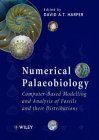
Numerical Palaeobiology: Computer-based Modelling and Analysis of Fossils and their Distributions This book, aimed at final year undergraduates, graduate students and professional palaeontologists, biologists and geologists, brings together the many strands of contemporary palaeontology through the medium of numeracy. It provides a comprehensive review, with applications, of the many computer based techniques available for the analysis and modelling of palaeontological data. The first part of the book covers classical phenetic taxonomy through cladistics and the computer-generated reconstructions of fossils to actual models for fossil growth. This leads onto distribution analysis and modelling of fossils in time and space. Detailed stratigraphical distributions of fossils are described in quantitative terms together with the larger-scale patterns in the history of life itself, while palaeoecology, palynofacies, trace fossils and palaeogeography are all introduced through a spectrum of numerical algorithms. The majority of the studies are linked to specific software packages and many are illustrated with case histories. Although there are a number of books available on computer modelling and data analysis in geology, no study has integrated the two with such a range of palaeontological subject material. |
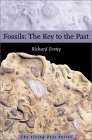 |
Fossils: The Key to the Past Richard Fortey has written a clear and authoritative text which gives a straightforward introduction to fossils, their study and their use in reconstructing the history of the Earth. He discusses what fossils are, how they form, and how they provide us with the evidence for evolution and the emergence of life. Extensively illustrated with photographs from the rich collections at The Natural History Museum, the book gives a current view of our understanding of the significance of fossil finds, and presents palaeontology as a living science. |
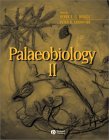 |
Palaeobiology II A Synthesis was widely acclaimed both for its content and production quality. Ten years on, Derek Briggs and Peter Crowther have once again brought together over 150 leading authorities from around the world to produce Palaeobiology II. Using the same successful formula, the content is arranged as a series of concise articles, taking a thematic approach to the subject, rather than treating the various fossil groups systematically.This entirely new book, with its diversity of new topics and over 100 new contributors, reflects the exciting developments in the field, including accounts of spectacular newly discovered fossils, and embraces data from other disciplines such as astrobiology, geochemistry and genetics.Palaeobiology II will be an invaluable resource, not only for palaeontologists, but also for students and researchers in other branches of the earth and life sciences. |
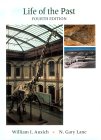 |
Life of the Past An introduction to the history of life on Earth, covering basic principles and processes, ecologic and paleoecologic organization, the history of past life forms, and major events that shaped this history. Can be used as a text for general students or beginning geology and biology students. |
 |
Applications of Palaeontology: Techniques and Case Studies Palaeontology, the scientific study of fossils, has developed from a descriptive science to an analytical science used to interpret relationships between earth and life history. This book provides a comprehensive and thematic treatment of applied palaeontology, covering the use of fossils in the ordering of rocks in time and in space, in biostratigraphy, palaeobiology and sequence stratigraphy. Robert Wynn Jones presents a practical workflow for applied palaeontology, including sample acquisition, preparation and analysis, and interpretation and integration. He then presents numerous case studies that demonstrate the applicability and value of the subject to areas such as petroleum, mineral and coal exploration and exploitation, engineering geology and environmental science. Specialist applications outside of the geosciences (including archaeology, forensic science, medical palynology, entomopalynology and melissopalynology) are also addressed. Abundantly illustrated and referenced, Applications of Palaeontology provides a user-friendly reference for academic researchers and professionals across a range of disciplines and industry settings. |
 |
Prehistoric Life: Evolution and the Fossil Record |
 |
Understanding Fossils: An Introduction to Invertebrate Palaeontology This book provides thorough coverage of palaeontology. It introduces the main invertebrate fossil groups, with summaries of characteristics, classification, evolutionary history and applications. It also provide up-to-date examples of the uses and importance of fossils. |
 |
Computational Paleontology Computational paleontology is simply a term applied to using computers and its facilities in the field of paleontology. However, we should be exactly precise in describing the term through explaining the main themes of this motivating and attractive scientific field. The uppermost aim of this book is to explain how computation could be competent in fetching fossils to life and the past to present. Computers for paleontologists save time and costs, interpret mysterious events precisely and accurately, visualize the ancient life definitely and undeniably. |
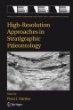 |
High-Resolution Approaches in Stratigraphic Paleontology This volume delves into a spectrum of theoretical as well as applied aspects of high-resolution stratigraphic approaches in paleontology. It explores how increasingly detailed knowledge of the fossil record can enhance our understanding of the evolution of life on Earth and also allows geoscientists to address a broad range of important evolutionary and environmental questions in this arena. A 'zipped' version of the program CONOP9 2007 along with read-me files, sample files, and other documentation are available via a web site (see below). An earlier version of CONOP9 was initially supplied with 'High-Resolution Approaches in Stratigraphic Paleontology' (PJ Harries, editor) and described in Chapter 13 of that volume. This is an updated version of the program, and the documentation supplied with this version supersedes the information supplied in that chapter. To view the CONOP9 Programs, click on the link CONOP9 Programs on the right side of this page under Related links. |
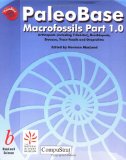 |
PaleoBase: Macrofossils Part 1 (CDRom) PaleoBase is a new initiative in the presentation of systematic information on fossil organisms. It represents the marriage of up-to-date systematic information on a collection of over 1500 fossil genera, state-of-the-art color digital photographs of representative specimens from The Natural History Museum's unrivaled paleontological collections, and modern relational database technology. With PaleoBase an important new tool for the teaching of life history in a wide variety of advanced secondary, undergraduate and graduate courses (e.g., paleontology, historical geology, stratigraphy, paleoceanography, paleobiogeography) becomes available to students and educators alike. PaleoBase: Macrofossils is the first product from the PaleoBase project, and will be released in three Parts. It will consist of approximately 1000 generic records drawn from the major invertebrate groups. The genera have been carefully selected to include taxa used in the teaching of paleontology and historical geology worldwide. Together they represent the ideal fossil collection; one that in practice only the largest natural history museums could hope to assemble. PaleoBase: Macrofossils gives educators, students and researchers access to a virtual collection of these fossils - many of which are actual figured specimens from the 19th and 20th century technical publications that served to originally establish the concepts of these genera. |
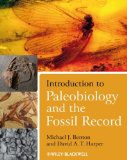 |
Introduction to Paleobiology and the Fossil Record This book presents a comprehensive overview of the science of the history of life. Paleobiologists bring many analytical tools to bear in interpreting the fossil record and the book introduces the latest techniques, from multivariate investigations of biogeography and biostratigraphy to engineering analysis of dinosaur skulls, and from homeobox genes to cladistics. All the well-known fossil groups are included, including microfossils and invertebrates, but an important feature is the thorough coverage of plants, vertebrates and trace fossils together with discussion of the origins of both life and the metazoans. All key related subjects are introduced, such as systematics, ecology, evolution and development, stratigraphy and their roles in understanding where life came from and how it evolved and diversified. Unique features of the book are the numerous case studies from current research that lead students to the primary literature, analytical and mathematical explanations and tools, together with associated problem sets and practical schedules for instructors and students. |
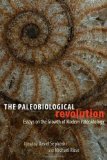 |
The Paleobiological Revolution: Essays on the Growth of Modern Paleontology Paleontology has long had a troubled relationship with evolutionary biology. Suffering from a reputation as a second-tier science and conjuring images of fossil collectors and amateurs who dig up bones, paleontology was marginalized even by Darwin himself, who worried that incompleteness in the fossil record would be used against his theory of evolution. But with the establishment of the modern synthesis in the 1940s and the pioneering work of George Gaylord Simpson, Ernst Mayr, and Theodosius Dobzhansky, as well as the subsequent efforts of Stephen Jay Gould, David Raup, and James Valentine, paleontology became embedded in biology and emerged as paleobiology, a first-rate discipline central to evolutionary studies. This incredible ascendance of this once-maligned science to the vanguard of a field is chronicled in The Paleobiological Revolution. Pairing contributions from some of the leading actors of the transformation with overviews from historians and philosophers of science, the essays here capture the excitement of the seismic changes in the discipline. In so doing, David Sepkoski and Michael Ruse harness the energy of the past to call for further study of the conceptual development of modern paleobiology. |